
Dressing room events
Open the inbox note, then Dynamics or the player profile.
The new block is the people, not another tactic slider. The Out Now post says running a team is not only statistics and tactics. A new system surfaces events that hit morale, and it widens how you talk to players. The feature blog puts the same idea in the dressing room. New inbox items bring squad morale events to you. The examples they give are a dressing-room conflict and a goal drought. The example they actually write out is specific. A player speaks out against you and your tactics. That can split the dressing room between people who back you and people who agree with the player. You are supposed to open that situation in Dynamics and in Player Profiles, get more context, and choose how to deal with it. The blog says the approach you pick can improve relationships and raise morale. It does not say every choice works. It says it can.
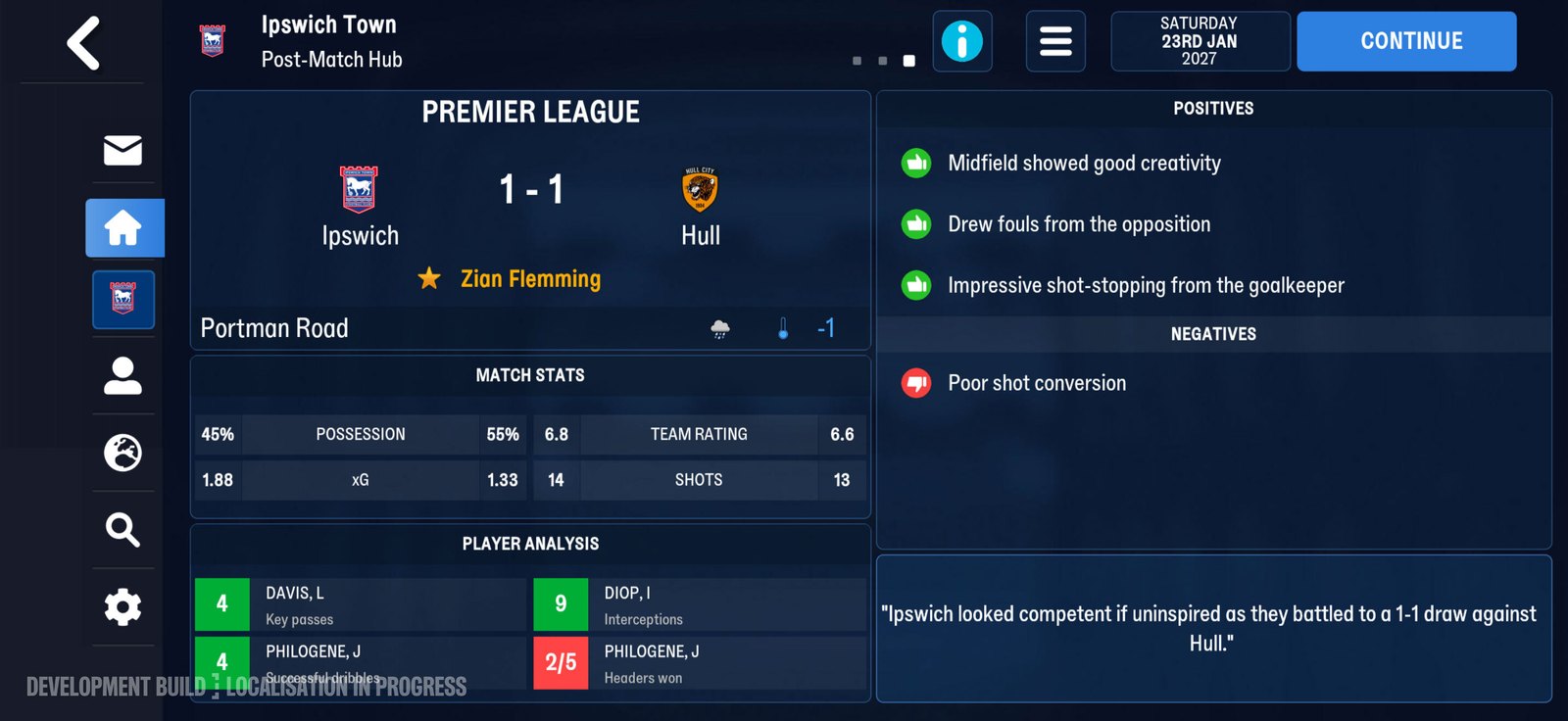
The post-match hub. Official screenshot, SEGA feature blog, 5 November 2026.
Where you read it
Dynamics is the screen. Player Profiles are the other. The FAQ says the events trigger player or squad reactions that you track in those two places. You influence them by talking to the player, or in public comments to the media. Those are the two channels the FAQ names. The replies you can give have their own page, because the blog and the FAQ disagree on which pair is new. The four names both texts use are on four reply names. Personality detail is part of the same upgrade: the posts say you get more insight into how a player is likely to respond. They do not publish a personality list beyond two search examples, which live on the search page.
| Piece | Where they put it |
|---|---|
| Morale events | new inbox items |
| Example, group | player speaks against you and your tactics; dressing room splits |
| Example, personal | goal drought for a striker |
| Read it | Dynamics, Player Profiles |
| Influence it | talk to the player, or media comments |
What a drought note is
The FAQ's example of a personal event is a goal drought for a striker. The blog's example of a group event is the dressing-room split. Both are inbox items. You do not have to guess that morale moved. The design they describe is a message that points at the event. What you do with it is the reply, the profile, and, if you take the FAQ's media line, a public comment.
The lines that are not printed
No morale number. No "say this and the split ends." No claim that every conflict is the tactics argument in the example. That example is an example. Other events exist in the system they describe. They did not list them.
People, not a slider
Statistics stay in the game. This block is the extra layer they described, not a replacement slider.
The argument they wrote out
Open that situation in Dynamics and in Player Profiles. Get more context. Choose how to deal with it. "Can" is the whole promise. A bad pick is still a pick they left in your hands.
Two screens, two channels
If a guide adds a team meeting button, it is not reading the FAQ. Personality detail is part of the same upgrade. Those examples live on the search page. Insight is not a chart. A likely response is still a judgment you make.
Drought note, split note
The drought note is personal. The split note is the group. Do not swap them and pretend the posts used the same example for both.
No script for the inbox
The unnamed note is still an inbox item in the system they described. The path does not change just because the example did not match your wording. A public comment is the media channel, not another dressing-room screen. Talking to the player is the other channel. Use either of those two, then read the reaction back in Dynamics or Player Profiles. Relationships can improve. Morale can rise. Neither line is a guarantee that the split closes on the spot.
How to read a split note
Open the note. Then open the player. The note tells you an event happened. The profile tells you who is in it. The two screens answer different questions, and reading only the first one leaves you guessing at the second. The group example the posts write out has two sides in it: players who back you, and players who agree with the one who spoke. Nothing in the posts tells you the size of either side. If the profile shows you who sits where, that is the context the FAQ said you would get. If it does not, the posts do not supply a substitute list, and a headcount you invent is worse than no headcount. The personal example is quieter. A striker on a goal drought is one player and one run of matches. It is not a referendum on your management, and it is not the split note with a smaller cast. The posts use it to show that the inbox carries individual morale news too, not only arguments. What you do is the same on both. Read the note, read the profile, pick a reply, then go back and read the reaction in Dynamics or the profile. The reaction is the only feedback the posts describe. There is no morale figure to watch move, and no confirmation message that tells you the choice was right.